

Build Your Own SCADA: A Complete Guide to Designing Powerful Industrial Automation Systems
Introduction: The Future of Industrial Automation with SCADA
In the modern industrial landscape, automation is no longer a luxury—it’s a necessity. Supervisory Control and Data Acquisition (SCADA) systems lie at the heart of industrial automation, connecting sensors, machines, and data analytics into one intelligent ecosystem.
But what if you could Build Your Own SCADA—a customized system that fits your exact process, integrates with your programmable logic controllers (PLCs), and scales with your operations?

That’s precisely what this guide from TheCoreSystems explores. Based in Chandigarh, TheCoreSystems is a software and AI-driven company that develops AI, IoT, IIoT, Data Science, and Industrial Automation solutions while offering advanced training in AI, Data Science, Python, Embedded Systems, IoT, and Cloud Computing.
Let’s dive deep into how you can design, structure, and implement your own SCADA solution—built for performance, reliability, and growth.
What Is a SCADA System?
SCADA (Supervisory Control and Data Acquisition) is an industrial control system that monitors and controls industrial processes—such as manufacturing, energy production, water treatment, or building automation.
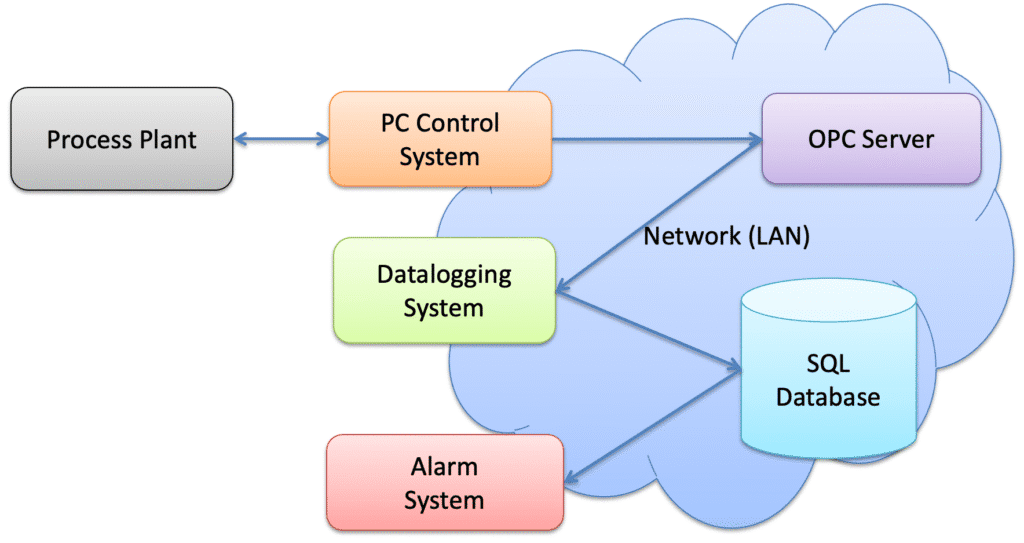
It consists of:
- Sensors and actuators are collecting real-time data
- PLCs and RTUs processing control signals
- Human Machine Interfaces (HMIs) displaying operational information
- Databases and servers storing, analyzing, and reporting process data
Modern SCADA systems combine real-time monitoring, data visualization, and remote control—providing a digital window into every part of an industrial operation.
Why Build Your Own SCADA?
While many ready-made SCADA packages exist, building your own gives you complete control over customization, integration, and scalability.

Benefits of Building Your Own SCADA:
- Customizable Architecture: Fit exactly to your process, sensors, and PLCs.
- Integration Flexibility: Connect with SQL databases, REST APIs, and IoT devices.
- Cost Efficiency: No recurring licensing costs.
- Adaptability: Add modules and new functionalities over time.
- Enhanced Security: Design a system with modern encryption and access control.
By building SCADA from the ground up, you ensure that every component—communication layer, control logic, and visualization—serves your unique operational needs.
Key Components of a SCADA Architecture
A complete Structure of SCADA includes several layers that work in harmony:
| Component | Function | Example |
|---|---|---|
| Sensors/Field Devices | Collect data from the process | Temperature, pressure, or level sensors |
| PLC/RTU | Executes control logic | Siemens, Allen-Bradley, Delta PLCs |
| Communication Network | Transfers data securely | OPC-UA, Modbus, MQTT |
| SCADA Server | Central processor storing and analyzing data | Database + historian server |
| HMI Interface | Visual dashboard for operators | GUI, alarm panels, real-time graphs |
Understanding the Structure of SCADA
According to software experts, an ideal SCADA architecture follows a client-server model:
- The server connects to PLCs, sensors, and databases.
- The client applications fetch and display data via dashboards.
This architecture supports:
- Centralized updates (no need to manually upgrade each terminal)
- Redundancy and failover systems
- Scalability across multiple industrial sites
In modern implementations, SCADA can also leverage cloud servers and edge computing for distributed control and real-time analytics.
Communication Layers and Data Flow
A well-designed SCADA communication structure defines how devices “talk” to each other.
Key protocols include:
- OPC-UA (Open Platform Communications Unified Architecture)
- Modbus TCP/IP and RTU
- MQTT (for IoT/IIoT integration)
- RESTful APIs for connecting third-party apps
These ensure real-time data acquisition, fault tolerance, and interoperability between different brands of PLCs and sensors.
The Role of PLC Automation in SCADA
At the heart of every SCADA system lies PLC automation.
PLCs execute the control logic that drives machines—turning valves, adjusting speed, controlling pressure, etc. SCADA systems gather the data from these PLCs and translate it into meaningful insights.
Why PLC automation is crucial:
- Ensures reliable and deterministic control
- Provides real-time data feedback to SCADA
- Enables remote diagnostics and predictive maintenance
- Simplifies integration with AI and IoT systems
When designing your system, always ensure your SCADA supports OPC-UA or Modbus communication with PLCs to enable seamless automation.
Steps to Build Your Own SCADA
Here’s a structured approach from TheCoreSystems engineers to building SCADA Applications effectively:
Step 1: Define System Objectives
Identify what processes you’ll control and what data you need to visualize.
Step 2: Choose the Right PLCs and Field Devices
Ensure compatibility with communication protocols (OPC, Modbus, etc.).
Step 3: Design the Network and Communication Architecture
Create a secure, redundant structure for data transmission.
Step 4: Develop the Server Framework
Integrate data historians, SQL databases, and analytics modules.
Step 5: Build the HMI Interface
Use intuitive dashboards, graphs, and alarm systems for operators.
Step 6: Implement Security
Add user authentication, TLS/SSL encryption, and access permissions.
Step 7: Test, Deploy, and Monitor
Run simulations, debug communication errors, and ensure full functionality.
Database and Data Historian Integration
A data historian is an essential part of SCADA—it logs real-time data for analysis, reporting, and trend visualization.
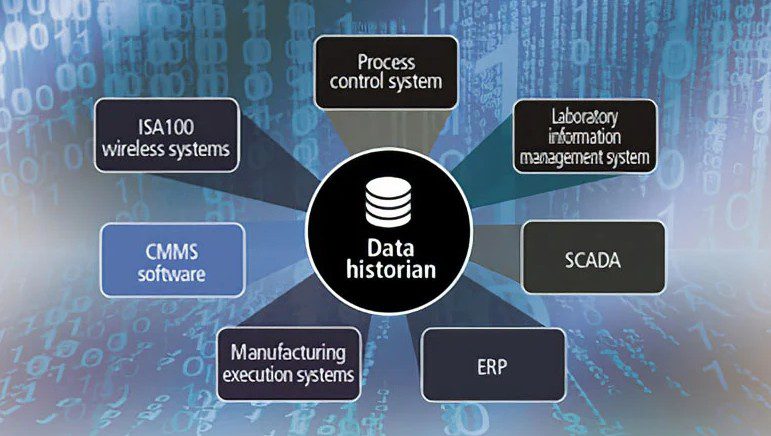
Key best practices:
- Use relational databases like MySQL, PostgreSQL, or MS SQL Server.
- Store time-series data for trend analysis.
- Enable data replication for disaster recovery.
These tools allow operators and managers to analyze historical performance and make data-driven decisions.
Interface Design: Building HMI and Dashboards
A successful SCADA system depends on an intuitive Human Machine Interface (HMI).
Best practices:
- Use color coding for alarms and system states.
- Include real-time trends, process flow diagrams, and KPIs.
- Enable operators to acknowledge alarms directly from the dashboard.
TheCoreSystems specializes in developing custom GUI widgets and AI-powered dashboards that enhance operator efficiency.
Security Considerations in SCADA Systems
With increasing connectivity comes increased risk.
A secure SCADA should include:
- Encryption (TLS/SSL) for network communications
- User authentication and role-based access control
- Firewall and VPN configurations for remote access
- Code signing to verify software integrity
Security is not optional—it’s a fundamental design principle in BuildingSCADA systems.
Advanced Technologies: AI, IIoT, and Edge Computing
Modern SCADA goes beyond monitoring—it predicts, optimizes, and automates.
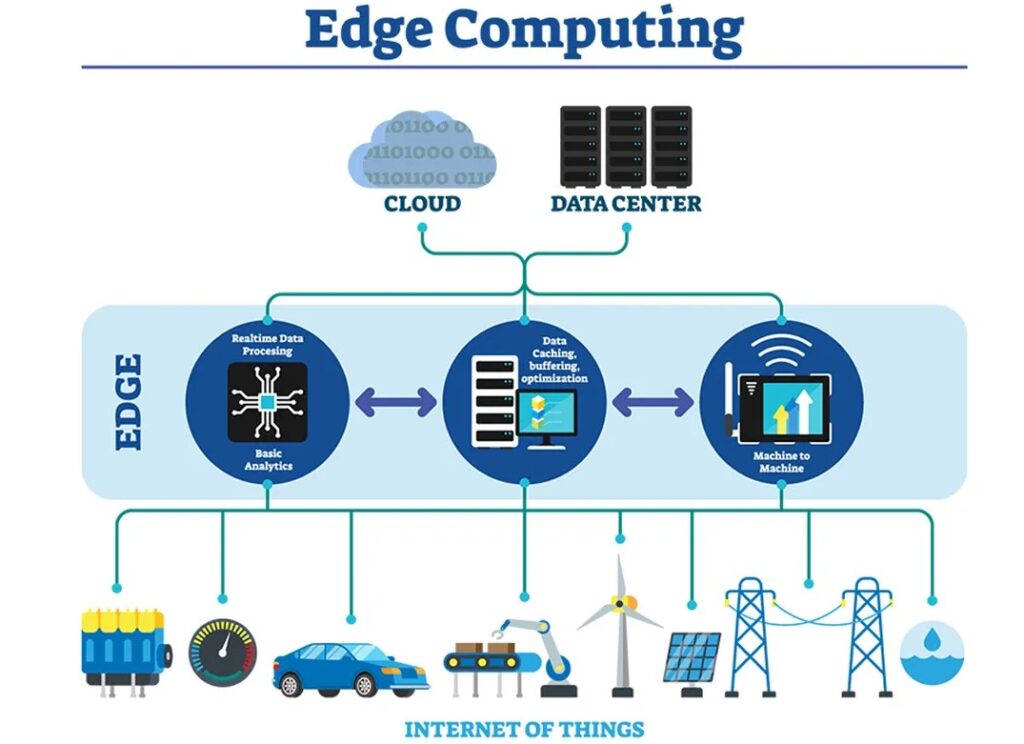
Integration possibilities:
- AI Algorithms for Predictive Maintenance
- IIoT (Industrial Internet of Things) for remote connectivity
- Edge computing for faster real-time analysis
The Core Systems leverages AI-driven analytics and IoT sensors to build next-generation SCADA systems that learn and adapt over time.
Tools and Frameworks for Building SCADA Applications
| Framework/Tool | Function | Type |
|---|---|---|
| Ignition by Inductive Automation | Cross-platform SCADA development | Commercial |
| Node-RED + MQTT | IoT and data flow control | Open-source |
| Zenon | Process visualization and automation | Commercial |
| Python + PyQt | Custom HMI development | Open-source |
| Grafana + InfluxDB | Data visualization and trend analysis | Open-source |
When developing your system, consider hybrid architectures combining open-source flexibility and enterprise-grade reliability.
Case Study: TheCoreSystems’ Industrial SCADA Projects
In collaboration with industries around Chandigarh, TheCoreSystems has designed and implemented multiple SCADA and IIoT solutions that connect AI, data analytics, and automation.
Example:
- Industry: Manufacturing and Process Automation
- Solution: Custom SCADA using PLC automation with AI-driven analytics
- Outcome: 40% improvement in process efficiency, 25% reduction in downtime
By integrating data science and IoT, TheCoreSystems transforms traditional plants into smart factories.
Common Mistakes to Avoid When Building SCADA
- Ignoring security during design
- Choosing incompatible PLC protocols
- Overcomplicating the HMI interface
- Neglecting the data historian setup
- Failing to plan redundancy or backup
Each of these errors can lead to system failure or inefficiency, making careful planning critical from the start.
Future of SCADA and AI Integration
The next era of SCADA involves AI-based decision-making, cloud integration, and self-healing systems.

Future SCADA will:
- Predict failures before they occur
- Automatically balance energy consumption
- Connect seamlessly to cloud AI services
With TheCoreSystems’ AI expertise, the boundary between control systems and intelligent analytics is rapidly disappearing.
FAQs
Q1. What does “Build Your Own SCADA” mean?
It means designing and developing a customized SCADA solution tailored to specific industrial or educational needs rather than buying a pre-built package.
Q2. What skills are needed to build SCADA?
Knowledge of PLC automation, SQL databases, networking, programming (Python, C++), and HMI design.
Q3. Can SCADA connect to IoT devices?
Yes, modern SCADA systems use protocols like MQTT to integrate with IoT and IIoT platforms.
Q4. What is the Structure of SCADA?
It includes sensors, PLCs, servers, HMIs, and communication networks—arranged in a client-server or distributed model.
Q5. Why is PLC automation important in SCADA?
PLCs ensure reliable control and real-time feedback, making them the backbone of industrial automation.
Q6. What industries use SCADA?
Manufacturing, oil & gas, energy, transportation, water treatment, and smart cities.
Q7. How does TheCoreSystems help students and industries?
They provide advanced training in AI, IoT, Data Science, Embedded Systems, and Industrial Automation while developing AI-powered industrial solutions in Chandigarh.
Conclusion
Building your own SCADA system is not just a technical challenge—it’s a strategic investment in control, customization, and innovation.
Whether you’re a student learning automation or an engineer implementing industrial solutions, mastering Building SCADA Applications gives you an edge in the era of Industry 4.0.
At TheCoreSystems, experts are empowering industries and students with the knowledge and tools to design intelligent, secure, and scalable SCADA systems powered by AI and IoT.