Mastering Web Development in Python (2025 Guide): Best Frameworks & Tools for Success
Introduction: Why Python Dominates Web Development
Python has evolved from a simple scripting language into one of the most powerful tools for modern web development. With its easy-to-read syntax, vast community support, and extensive ecosystem of frameworks and libraries, web development in Python has become a go-to choice for developers and businesses worldwide.

In this guide, we’ll explore how Python powers the web, the top frameworks for web development in Python, practical tools, project ideas, and how mastering these frameworks can launch your software development career to new heights.
What is web development in Python?
Web development in Python refers to building websites, web applications, and APIs using the Python programming language. It involves using frameworks, libraries, and tools that simplify development tasks like database management, routing, and user authentication.
Python offers a clean structure for both backend and full-stack development, allowing developers to focus on creating robust functionality rather than boilerplate code.
Why Choose Python for Web Development?
Python’s popularity in web development can be attributed to several advantages:
One of the biggest advantages of web development in Python is its simplicity and accessibility. Python’s clean, beginner-friendly syntax makes it easy to learn, even for those new to coding. The language also offers a wide variety of frameworks, allowing developers to choose the best tools for their specific needs—from lightweight micro-frameworks to full-stack enterprise solutions.
Beyond flexibility, Python provides extensive libraries that support everything from machine learning and data handling to security features. Its strong community support ensures regular updates, while cross-platform compatibility lets developers build and deploy web applications across Windows, Linux, macOS, and cloud environments. These strengths make Python a top choice for modern web development.
With these benefits, Python empowers startups and enterprises alike to build scalable, secure, and efficient web applications.
Understanding Frameworks for Web Development in Python
A framework for web development in Python provides pre-built tools and components that handle common web app tasks. Instead of coding everything from scratch, frameworks manage URLs, templates, and databases for you.
Python frameworks come in three main categories:
- Full-stack frameworks (e.g., Django)
- Micro-frameworks (e.g., Flask, Bottle)
- Asynchronous frameworks (e.g., FastAPI, Tornado)
These frameworks drastically reduce development time and improve maintainability.
Top Python Frameworks for Software Development in 2025
Here are the top Python frameworks for software development dominating 2025:
When it comes to frameworks for web development in Python, developers have a wide range of powerful options tailored to different project needs. Django, a full-stack framework, is ideal for complex enterprise-level web applications with built-in features like ORM, an admin panel, and authentication. Flask, on the other hand, is a lightweight micro-framework perfect for building small apps and APIs thanks to its simple, modular, and flexible design.
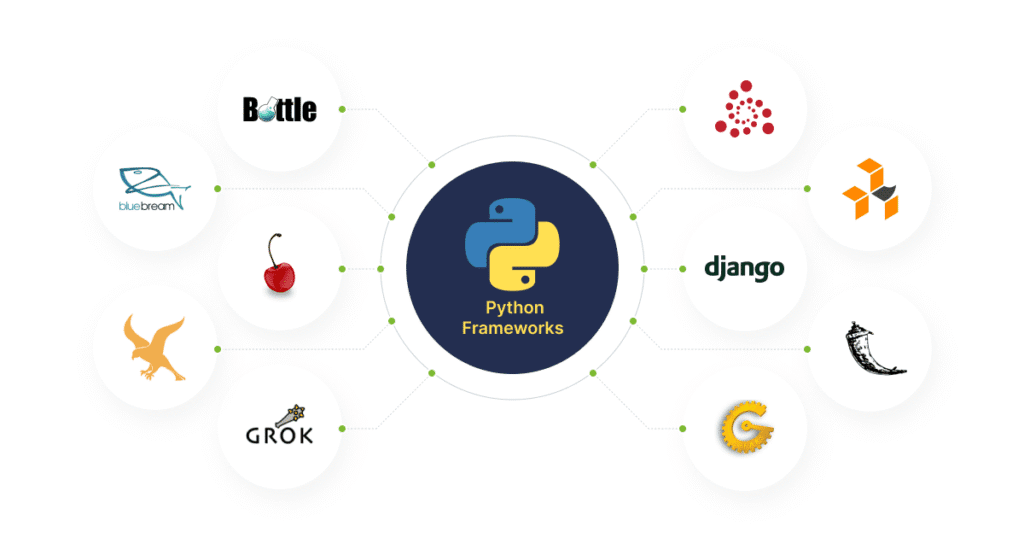
For developers seeking performance and speed, FastAPI stands out with its asynchronous architecture and automatic documentation support. Pyramid offers flexibility for scalable enterprise applications, while Tornado excels in real-time applications that require handling thousands of simultaneous connections. Finally, Bottle provides a minimalist, single-file setup, making it perfect for quick prototypes or simple web apps. Together, these frameworks showcase Python’s versatility in modern web development.
Each framework supports robust functionality and aligns with modern web development practices.
Django vs Flask vs. FastAPI—A Framework Showdown
Recommendation:
- Beginners should start with Flask.
- For full-scale web apps, choose Django.
- For modern, high-performance APIs, go with FastAPI.
Full-Stack Development with Python
Python can handle both frontend and backend development through integrations with JavaScript frameworks and APIs. A typical full-stack Python setup includes:
- Backend: Django / Flask
- Frontend: React / Vue.js
- Database: PostgreSQL / MongoDB
- Deployment: Docker + AWS
This stack allows developers to build dynamic, responsive, and secure applications.
Building RESTful APIs with Python
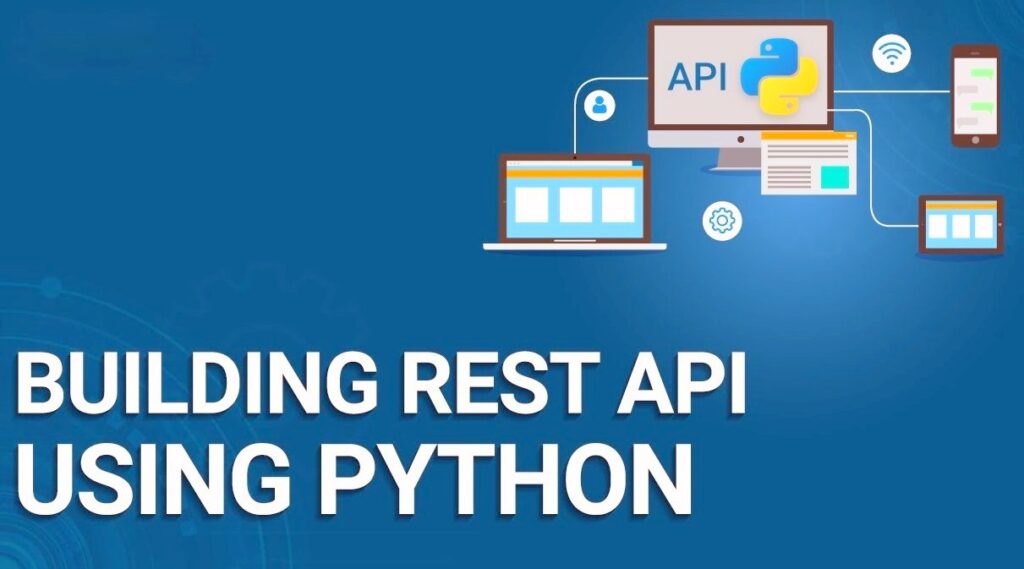
APIs enable applications to communicate with each other. Using Flask or FastAPI, developers can build efficient RESTful APIs.
Example (FastAPI snippet):
This simple snippet creates a fully functional API endpoint—that’s how easy web development in Python can be.
Backend vs Frontend: Where Python Fits Best
While JavaScript dominates the frontend, Python shines in the backend. It manages:
- Business logic
- Data storage and manipulation
- Server-side rendering
- API development
- Security handling
Python ensures smooth performance and scalability, especially in complex, data-driven web apps.
Python Tools for Web Developers
In web development in Python, several essential tools streamline the development process. VS Code and PyCharm serve as powerful code editors, while PyTest and unittest handle automated testing. For version control, developers rely on Git and GitHub to manage collaboration efficiently.
Docker simplifies containerization and app packaging, and platforms like AWS and Heroku make deployment easier. For database operations, SQLAlchemy provides smooth ORM management, helping developers maintain organized and efficient projects.
These tools streamline the workflow and help maintain high-quality code.
Security Best Practices in Python Web Apps
Security is vital for any web application. Here are key Python security practices:
- Use HTTPS (SSL/TLS)
- Escape user inputs to prevent SQL injection
- Employ Django’s built-in CSRF protection
- Regularly update dependencies
- Hash passwords using bcrypt or Argon2
These best practices ensure data safety and protect users from vulnerabilities.
Popular Web Development Libraries in Python
Python boasts powerful libraries that enhance web development:
- Requests—For HTTP requests
- BeautifulSoup—for web scraping
- SQLAlchemy—For ORM and databases
- Jinja2 – For templating
- Celery—for asynchronous task queues
Each library complements a specific area of web app functionality.
Hosting and Deployment Options
Deploying a Python web app can be done easily using:
- Heroku (for beginners)
- AWS Elastic Beanstalk
- Google Cloud Run
- DigitalOcean
- Vercel (for APIs)
Use Docker containers to make your deployment portable and scalable.
Real-World Examples of Python Web Apps
Many popular applications are built using Python frameworks for software development:
- Instagram – Django
- Pinterest – Django
- Reddit – Pylons
- Spotify – Flask
- Netflix – FastAPI for microservices
This proves Python’s reliability and scalability at a global level.
Python Career Path in Web Development
A Python web developer can transition into several roles:
- Junior Web Developer
- Full-Stack Developer
- Backend Engineer
- DevOps Engineer
- Software Architect
As you gain expertise in frameworks for web development in Python, you can advance to senior-level positions and even lead development teams.
Salary Trends and Job Opportunities
According to Glassdoor (2025 data):
Python developers in India are especially in demand for fintech, AI startups, and SaaS platforms.
Common Challenges and Solutions
Future of Web Development in Python (2025 & Beyond)
Python continues to evolve, integrating seamlessly with AI, data science, and IoT. Future trends include:
- AI-driven web personalization
- Asynchronous and serverless applications
- Integration with machine learning models
- Cloud-native deployment
Python’s ecosystem ensures it remains relevant for decades.
FAQs
Is Python good for web development in 2025?
Which is the best framework for web development in Python?
Can I become a full-stack developer using Python?
How long does it take to learn Python for web development?
Is Python suitable for enterprise-level web apps?
What are some Python frameworks for software development?
Is FastAPI better than Flask?
What’s the future of Python web developers?
Conclusion
Mastering web development in Python opens a world of opportunities. Whether you’re building APIs, dynamic websites, or enterprise-grade platforms, Python’s frameworks provide the power, flexibility, and performance you need.
From Django’s full-stack capabilities to FastAPI’s async speed, Python frameworks continue to shape the digital landscape in 2025 and beyond.
Start today—learn a framework for web development in Python, build projects, and watch your web development career flourish.