


Web Development Roadmaps: A Complete 2025 Guide for Beginners and Full-Stack Developers
In 2025, the demand for skilled web developers continues to grow rapidly. Whether you’re a beginner taking your first step or someone aiming to become a full-stack professional, having a clear direction is essential. That’s where web development roadmaps come in.

This guide will help you understand every stage of your journey — from learning the basics of HTML and CSS to mastering fullstack frameworks like React and Node.js.This comprehensive guide on web development roadmaps will walk you through each stage of your journey — from understanding HTML, CSS, and JavaScript basics to exploring advanced fullstack frameworks like React, Node.js, and Express. You’ll also discover how to structure your learning plan, build real-world projects, and prepare for a professional career in web development.
What Is a Web Development Roadmap?
A web development roadmap is a structured plan that guides learners through the essential technologies and skills needed to build websites and web applications.
It outlines what you should learn first, what comes next, and how to progress efficiently — saving you time and confusion. Think of it as a step-by-step map leading you from “beginner” to “job-ready developer.”
Why You Need a Web Development Roadmap
Without a roadmap, many beginners feel overwhelmed. There are hundreds of tutorials, languages, and frameworks available — and it’s easy to get lost. A good web development roadmap for beginners helps you:
-
Learn in a logical sequence
-
Avoid skipping important fundamentals
-
Track your learning progress
-
Stay motivated with clear milestones
-
Build practical projects confidently
A roadmap ensures you learn smarter, not harder.
Different Paths in Web Development
There are three main paths in web development you can choose from:
-
Front-End Development: Focuses on everything users see and interact with — the layout, colors, buttons, and animations.
-
Back-End Development: Deals with the server, databases, and logic that power the website behind the scenes.
-
Full-Stack Development: Combines both front-end and back-end skills, allowing you to build complete applications from start to finish.
Front-End Web Development Roadmap
Front-end development is the visual layer of the web — everything that appears in the browser.
Core Languages
-
HTML (HyperText Markup Language): Defines the structure of your web pages.
-
CSS (Cascading Style Sheets): Controls colors, fonts, layout, and design.
-
JavaScript: Adds logic, animations, and interactivity.
Responsive Design
Modern websites must look great on all devices — desktops, tablets, and smartphones. Learn:
-
Media queries
-
Mobile-first design principles
-
Frameworks like Bootstrap or Tailwind CSS
Front-End Frameworks
After mastering the basics, move to popular frameworks:
-
React.js – Fast, component-based library by Meta
-
Vue.js – Simple and beginner-friendly
-
Angular – Robust, enterprise-ready framework
Version Control
Understanding Git and GitHub is vital for collaboration, version tracking, and deploying projects.

Back-End Web Development Roadmap
The back end is the brain of your web application. It manages data, processes requests, and connects to databases.
Choose a Back-End Language
-
JavaScript (Node.js) – Great for those following a fullstack web development roadmap
-
Python (Django, Flask) – Easy syntax, excellent for startups and data-driven apps
-
PHP / Java / C# – Common in enterprise and legacy systems
Databases
Databases store your web app’s data. Learn both types:
-
Relational Databases: MySQL, PostgreSQL
-
NoSQL Databases: MongoDB, Firebase
APIs and Authentication
Learn to create and consume RESTful APIs or GraphQL APIs, and understand how to secure your apps using JWT tokens or OAuth authentication.
Fullstack Web Development Roadmap
A fullstack web development roadmap merges front-end and back-end development, empowering you to build complete, dynamic web applications independently.
Popular Stacks
-
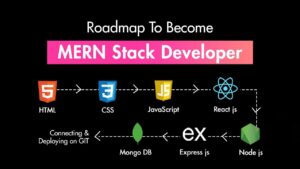
MERN Stack: MongoDB, Express.js, React, Node.js
-
MEAN Stack: MongoDB, Express.js, Angular, Node.js
-
LAMP Stack: Linux, Apache, MySQL, PHP
Essential Skills for Fullstack Developers
-
Building and connecting front-end to back-end APIs
-
Managing cloud deployments (AWS, Render, or Vercel)
-
Using version control and continuous integration tools
-
Implementing authentication and data security
-
Testing and debugging using frameworks like Jest or Mocha
Tools Every Web Developer Should Know
A developer’s toolkit can make or break productivity. You should get comfortable with:
-
VS Code or Sublime Text (code editors)
-
Chrome DevTools for debugging
-
npm or yarn for managing packages
-
Figma or Canva for UI design
-
Netlify or Vercel for deploying websites.

Complete web stack developer roadmap for mastering fullstack web development

Popular Web Development Frameworks
Frameworks simplify repetitive tasks and improve speed. Some of the top frameworks include:
-
React.js for building user interfaces
-
Next.js for server-side rendering
-
Django for Python-based apps
-
Laravel for PHP development
-
Express.js for Node.js backends
The Web Developer Career Path
Becoming a professional developer happens in stages:
-
Beginner Level: Focus on HTML, CSS, and JavaScript fundamentals.
-
Intermediate Level: Learn frameworks, APIs, and Git.
-
Advanced Level: Dive into fullstack concepts, database design, and deployment.
-
Expert Level: Specialize in scalable architectures, DevOps, or advanced frameworks.
Tips to Follow a Web Development Roadmap Successfully
Following a web development roadmap is like taking a guided journey — it gives you direction, but you still have to walk the path yourself. Many beginners start strong but lose motivation midway, either because they get overwhelmed or distracted. To make the most of your learning journey and progress confidently toward becoming a fullstack developer, here are some essential tips that can help you succeed.
-
Build real projects as you learn.
-
Study official documentation — it’s your best resource.
-
Be consistent — one hour daily is better than a long weekend sprint.
-
Join developer communities like GitHub, Discord, or Reddit.
-
Stay updated — web technologies evolve fast.
Free Resources to Learn Web Development
Here are some trusted resources that offer free and high-quality tutorials:
-
MDN Web Docs — The best place to learn HTML, CSS, and JavaScript.
-
freeCodeCamp — Fullstack lessons with real projects.
-
W3Schools — Beginner-friendly tutorials for all web technologies.
Web stack developer roadmap for beginners

Common Mistakes Beginners Should Avoid
When starting your journey with web development roadmaps, it’s easy to feel overwhelmed by the number of tools, tutorials, and technologies available online. While curiosity is great, beginners often make certain mistakes that slow down their learning progress. Understanding and avoiding these mistakes can make your journey smoother, faster, and much more enjoyable.
-
Switching between too many courses at once
-
Ignoring version control
-
Skipping responsive design
-
Focusing only on frameworks, not the core languages
-
Avoiding projects — theory alone won’t build skills
How Long Does It Take to Learn Web Development?
Your learning pace depends on time, effort, and consistency.One of the most common questions people ask when starting their web development journey is, “How long will it take me to learn everything?” The truth is, there’s no fixed timeline — your progress depends on your learning style, available time, effort, and consistency. Everyone learns differently, but following a well-structured web development roadmap helps you stay on track and measure your growth effectively.
-
Part-Time Learners: 6–9 months to reach a job-ready level
-
Full-Time Learners: 3–6 months with daily practice
-
Bootcamp Learners: 8–12 weeks of intensive training
Remember — consistency matters more than speed.
FAQs About Web Development Roadmaps
FAQ title
Conclusion
The journey to becoming a web developer is exciting and full of opportunities. Whether you’re exploring the web development roadmap for beginners or advancing through the fullstack web development roadmap, your growth depends on one thing — consistent learning and practical application.
By following the right roadmap, practicing regularly, and staying curious, you’ll soon be ready to build professional, high-performing web applications confidently.
In today’s tech-driven world, web development isn’t just a skill — it’s a gateway to global opportunities. With dedication, patience, and the right roadmap to guide you, you can shape your future in one of the fastest-growing and most rewarding careers of 2025 and beyond.


