Introduction to Knowledge Based Agent in AI:
A knowledge based agent in AI is an intelligent system that uses a repository of knowledge and logical reasoning to make decisions, solve problems, and interact intelligently with its environment. Unlike reactive agents that respond purely based on input, knowledge-based agents think — they interpret, reason, and plan based on their knowledge base.
In simple terms, a knowledge based agent in AI uses stored data (knowledge) and logical rules to perform tasks just like a human expert would. It’s a cornerstone concept in artificial intelligence and forms the foundation of expert systems, intelligent assistants, and decision-making software.
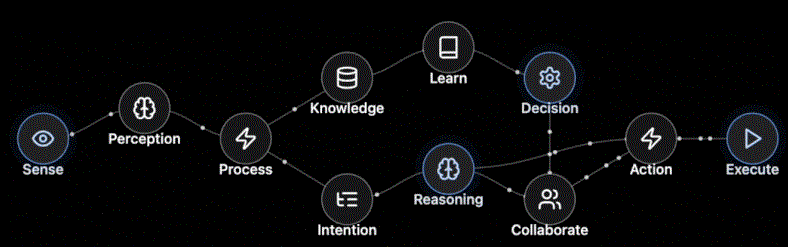
Why Knowledge Based Agents Matter in Artificial Intelligence:-
The Role of Knowledge in AI Decision-Making
Knowledge is what separates an intelligent agent from a mere programmed system. In artificial intelligence, data by itself has limited value unless it can be understood, reasoned upon, and acted on. Knowledge based agents can:
-
Analyze historical data.
-
Infer new facts using logical rules.
-
Adapt to new environments using learned experience.
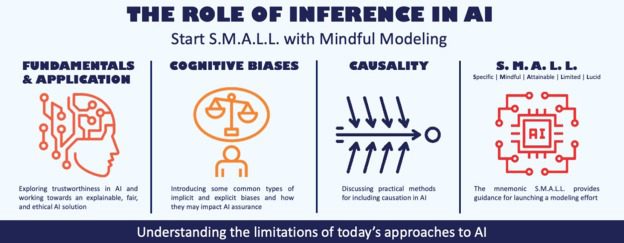
For example, in a medical diagnosis system, a knowledge based agent can infer possible diseases from symptoms using a knowledge base of medical rules and relationships.
Architecture of a Knowledge Based Agent:
A knowledge based agent in AI typically consists of three major components that allow it to function intelligently.
1. Knowledge Base: The Core of Intelligence
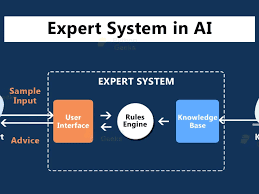
The knowledge base (KB) stores facts, rules, and information about the world. It includes:
-
Declarative knowledge: Facts and statements about the world.
-
Procedural knowledge: Instructions on how to perform tasks.
Example:
If a rule states, “If temperature > 100°F, then fever = True,” the agent uses this to reason and make decisions.
2. Inference Engine: The Brain of the Agent
The inference engine applies logical reasoning to the knowledge base to derive conclusions. It uses:
-
Forward chaining (data-driven reasoning)
-
Backward chaining (goal-driven reasoning)
3. Performance and Learning Elements
The performance element executes the actions, while the learning element improves the agent’s knowledge base over time.

How a Knowledge Based Agent Works:-
Step-by-Step Working Process
-
Perception: The agent perceives data from its environment.
-
Interpretation: It interprets the data based on stored knowledge.
-
Reasoning: It applies inference rules to draw conclusions.
-
Action: It performs actions based on the reasoning.
-
Learning: It updates its knowledge base for future use.
Example of Knowledge Based Agent in Real Life:-
A virtual assistant like Siri or Google Assistant uses knowledge-based reasoning to interpret commands and respond meaningfully.
Advantages of Knowledge Based Agents in AI
Efficiency and Accuracy
Knowledge based agents improve decision accuracy by relying on logical reasoning rather than guesswork.
Scalability and Adaptability
They can be easily scaled with additional knowledge and adapted to new problem domains without complete redesign.
Limitations and Challenges
While powerful, knowledge based agents in AI face challenges such as:
Knowledge Representation Issues
Encoding human knowledge into logical rules can be complex and time-consuming.
Computational Complexity
Reasoning with large knowledge bases can demand significant computing power.
Applications of Knowledge Based Agents in AI
Expert Systems and Decision Support
Used in finance, law, and healthcare to mimic expert-level decision-making.
Healthcare and Diagnostics
AI systems like IBM Watson use knowledge-based reasoning for diagnosing diseases and recommending treatments.
Autonomous Vehicles and Robotics
Knowledge based agents enable robots to understand environments, plan routes, and make safe decisions.
Comparison: Knowledge Based Agent vs Rational Agent
When comparing a knowledge based agent in AI with a rational agent, the key distinction lies in their approach to reasoning and decision-making. A knowledge based agent in AI relies heavily on a structured knowledge base containing facts, rules, and relationships about its environment. It uses an inference engine to apply logical reasoning and derive conclusions from that stored information. This allows the agent to explain its actions, justify its decisions, and even update its knowledge over time. Essentially, it behaves like a human expert — analyzing situations using existing knowledge before taking action.
On the other hand, a rational agent focuses on choosing the most optimal action to achieve its goals based on performance measures. Rather than depending on explicit knowledge or logical rules, it evaluates possible outcomes and selects the one that maximizes success. Rational agents often use utility functions, reinforcement learning, and optimization algorithms to make decisions dynamically, especially in uncertain environments.
While both types aim to act intelligently, a knowledge based agent in AI emphasizes reasoning and explainability, making it suitable for expert systems, diagnostics, and decision-support tools. In contrast, a rational agent is more aligned with autonomous robotics, game-playing AI, and adaptive systems that learn through interaction. Together, they represent two complementary approaches in artificial intelligence — one grounded in symbolic reasoning, and the other in goal-driven behavior.
Building a Simple Knowledge Based Agent – Step-by-Step Guide:-
-
Define the problem domain (e.g., medical diagnosis).
-
Create a knowledge base of facts and rules.
-
Implement an inference engine using forward or backward chaining.
-
Integrate a user interface for interaction.
-
Test and refine using real-world data.
Tools: Python, Prolog, CLIPS, and TensorFlow.
The Future of Knowledge Based Agents in Artificial Intelligence
Integration with Machine Learning and Deep Learning
Future agents will combine symbolic AI (reasoning) with neural networks (learning), creating hybrid intelligent systems.
The Role of Explainable AI (XAI)
Explainable AI will make knowledge-based decisions more transparent, improving user trust in autonomous systems.
FAQs About Knowledge Based Agent in AI
1. What is a knowledge based agent in AI?
2. How does a knowledge based agent differ from a simple reflex agent?
3. What are the main components of a knowledge based agent?
4. Where are knowledge based agents used today?
5. What is the biggest challenge in building knowledge based agents?
6. Can machine learning improve knowledge based agents?
7. Are knowledge based agents still relevant in modern AI?
8. What programming languages are used to develop these agents?
Conclusion
A knowledge based agent in AI is the foundation of intelligent decision-making systems. It brings reasoning, adaptability, and human-like understanding into artificial intelligence. As AI evolves, these agents will integrate more deeply with machine learning and explainable AI, shaping the next era of smart, transparent, and efficient automation.