


Introduction—Why Full-Stack Development Matters
In the fast-evolving world of web and software development, full-stack developers are the backbone of digital transformation. They build everything—from the user interface you see on your screen to the backend systems that power it.
Among the most sought-after technologies in full-stack development are the MEAN and MERN stacks.
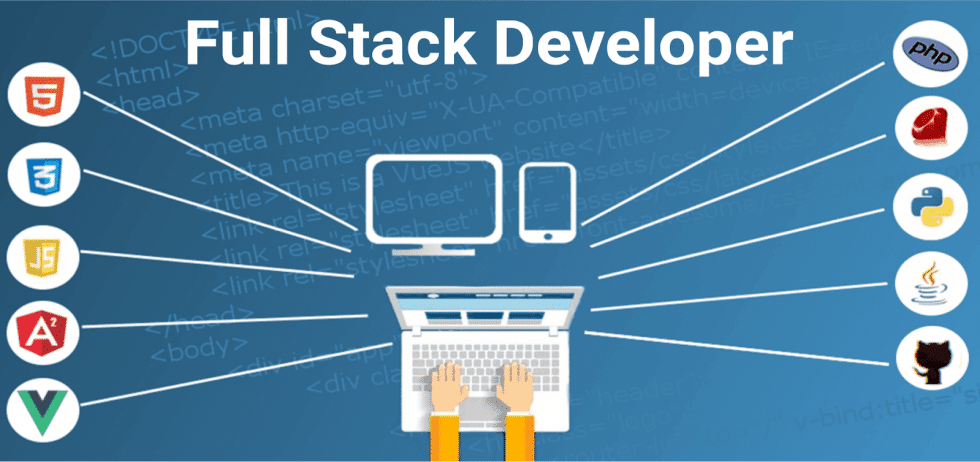
Both are JavaScript-based, open-source frameworks that make building web applications faster, more scalable, and more efficient. But what exactly do these stacks stand for? And how do they differ from each other?
Let’s dive into the MEAN and MERN Stack full forms, explore their differences, and see which one is ideal for your next project or career move.
Understanding the MEAN Stack Full Form
The MEAN stack is one of the most powerful and structured frameworks for full-stack development.

MEAN stands for:
| Letter | Full Form | Function |
|---|---|---|
| M | MongoDB | Database |
| E | Express.js | Backend framework |
| A | Angular | Frontend framework |
| N | Node.js | Server environment |
Components of the MEAN Stack
- MongoDB: A NoSQL database storing data in flexible, JSON-like documents.
- Express.js: A backend framework simplifying routing, middleware, and API creation.
- Angular: A front-end framework by Google for creating dynamic single-page applications (SPAs).
- Node.js: A runtime environment that allows developers to execute JavaScript on the server.
Advantages of MEAN Stack
- End-to-end JavaScript environment—Frontend and backend share the same language.
- Two-way data binding—Angular automatically synchronizes data between the model and view.
- Highly structured—perfect for enterprise-grade applications.
- Community Support—Backed by Google and open-source contributors worldwide.
MEAN is best suited for large-scale, enterprise-level applications requiring a stable and consistent architecture.
Understanding the MERN Stack Full Form
Just like MEAN, the MERN stack is a JavaScript-based technology set that simplifies full-stack development.

MERN stands for:
| Letter | Full Form | Function |
|---|---|---|
| M | MongoDB | Database |
| E | Express.js | Backend framework |
| R | React | Frontend library |
| N | Node.js | Server environment |
Components of the MERN Stack
- MongoDB: Non-relational database for JSON-style document storage.
- Express.js: Simplifies backend routes and server-side logic.
- React: Developed by Meta (Facebook), it’s a library focused on reusable UI components and fast rendering.
- Node.js: Allows building scalable backend applications using JavaScript.
Advantages of MERN Stack
- Lightweight and Flexible: React’s modular approach allows faster UI development.
- Fast Rendering: React’s Virtual DOM improves performance.
- Reusable Components: Saves time and improves consistency.
- Strong Ecosystem: Massive community, extensive libraries, and tools.
MERN is particularly popular among startups and modern web application developers who value agility and flexibility.
MEAN and MERN Stack Full Form: Side-by-Side Comparison
While both stacks share three components—MongoDB, Express.js, and Node.js—they differ in one key area: the frontend framework.
| Aspect | MEAN Stack | MERN Stack |
|---|---|---|
| Full Form | MongoDB, Express.js, Angular, Node.js | MongoDB, Express.js, React, Node.js |
| Frontend Technology | Angular (Framework) | React (Library) |
| Learning Curve | Steeper—more rules, predefined structure | Easier—flexible and lightweight |
| Data Flow | Two-way binding | One-way data flow |
| Best For | Enterprise and structured projects | Real-time, interactive applications |
| Performance | Slightly slower for frequent UI changes | Faster due to Virtual DOM |
| Popularity | Moderate, enterprise focus | Very high, especially among startups |
| Developer Demand (2025) | High in corporate environments | Extremely high globally |
Key Similarities Between MEAN and MERN
Despite their differences, the MEAN and MERN Stack full forms share a strong foundation in JavaScript technologies, making both ideal for modern, scalable, and cloud-ready applications. Let’s explore their deeper similarities beyond just their shared components.

1. End-to-End JavaScript Development:
Both stacks enable developers to use JavaScript throughout the entire application, from frontend interfaces to backend logic and database interactions. This single-language environment reduces complexity and makes debugging, maintenance, and scaling much easier.
2. Open-Source and Community Driven:
The MEAN and MERN ecosystems thrive on open-source technologies maintained by vibrant global communities. This ensures constant updates, large support forums, and thousands of reusable modules and plugins that simplify development.
3. Node.js Backend Power:
Both MEAN and MERN stacks rely on Node.js for backend execution, offering non-blocking, event-driven architecture. This allows handling of thousands of concurrent requests efficiently, making them excellent choices for real-time and data-intensive web apps.
4. API and Architecture Support:
They both follow the MVC (Model-View-Controller) design pattern, ensuring clean separation between business logic and presentation layers. RESTful APIs can be easily implemented using Express.js, ensuring flexible data exchange between client and server.
5. Cloud and Scalability Ready:
Applications built with either stack can be effortlessly deployed on cloud platforms like AWS, Azure, or Google Cloud. With MongoDB’s horizontal scalability and Node.js performance optimization, both stacks can handle heavy traffic and large datasets.
6. Ideal for Modern Use Cases:
From e-commerce to social media and IoT dashboards, both MEAN and MERN stacks deliver rapid development, reusable code, and responsive UI, making them the top choice for startups and enterprises alike.
Ultimately, the difference between the MEAN and MERN stacks lies not in their foundation but in how they approach frontend flexibility—Angular’s structure versus React’s freedom.
Difference Between MEAN and MERN Stack
Understanding the difference between MEAN and MERN stacks helps developers choose the right one for their goals:
| Feature | MEAN | MERN |
|---|---|---|
| Frontend Nature | Angular is a full-fledged framework with TypeScript | React is a library using JSX |
| Development Speed | Slower due to the strict structure | Faster due to flexibility |
| Performance | Excellent for large enterprise apps | Excellent for dynamic SPAs |
| Community Support | Strong support from Google | Massive open-source support from Meta |
| Integration with Third-Party Tools | Limited by the Angular structure | Easier integration with tools |
| Learning Curve | Steeper | Gentler |
| Example Use Case | Banking dashboard, ERP systems | Social media apps, streaming platforms |
In short, MEAN = structure and scalability, while MERN = flexibility and performance.
Choosing Between MEAN vs. MERN Stack—Which Is Right for You?
Choosing between the MEAN vs. MERN stack full form depends on your project goals, scalability needs, and developer experience.

When to Choose MEAN Stack
- Enterprise-grade applications (ERP, CRM, dashboards)
- Projects requiring a highly structured framework
- Development teams familiar with TypeScript and Angular
When to Choose MERN Stack
- Startups and MVPs needing rapid development
- Real-time or interactive apps (e.g., chats, dashboards)
- Teams preferring flexibility and modular design
Industry Trends and Job Market (2025)
According to current trends:
- MERN developers are more in demand due to the widespread adoption of React.
- MEAN developers are preferred in large corporations and government projects.
Both offer lucrative salaries:
- India: ₹5–12 LPA (MERN), ₹4–10 LPA (MEAN)
- USA: $85,000–$140,000 annually
MEAN and MERN Stack Developer Career Path

Required Skills
- JavaScript (ES6+)
- HTML5 & CSS3
- Node.js & Express.js
- MongoDB basics
- Angular or React
- REST APIs & JSON
- Git/GitHub collaboration
Career Roles
- Full-Stack Developer
- Front-End Developer
- Backend Developer
- Software Engineer (MEAN/MERN Stack)
- Web Application Architect
Real-World Applications
- MEAN: ERP software, HR management systems, government apps.
- MERN: Netflix-like streaming apps, social platforms, e-commerce dashboards.
Learning MEAN and MERN at TheCoreSystems
TheCoreSystems, based in Chandigarh, is a software development and AI-driven company offering advanced training in:
- AI, Data Science, and Full-Stack Web Development
- MERN and Python Full-Stack with AI & IoT
- Data Analytics, Embedded Systems, Cyber Security, AWS Cloud, and Linux
Why Choose TheCoreSystems
- Industry-experienced mentors
- Real-world projects using AI, IoT, IIoT, and Data Science
- Collaborations with industries and universities across North India
- Job-ready programs designed for students and professionals
With TheCoreSystems, learners gain hands-on experience in real industrial environments, preparing them for in-demand roles across the globe.
FAQs on MEAN and MERN Stack Full Form
FAQ title
What is MEAN stack full form?
What is MERN stack full form?
Which is better: MEAN stack or MERN stack?
Which is easier to learn – MEAN or MERN?
Which stack is more in demand in 2025?
What are the job opportunities for MEAN/MERN developers?
Where can I learn MEAN and MERN with hands-on training?
Can I switch from MEAN to MERN easily?
Future of Full-Stack Development in 2025 and Beyond
The future of full-stack development is more exciting than ever, with the MEAN and MERN Stack Full Form technologies continuing to lead innovation. These two JavaScript-based frameworks define how modern developers build scalable, intelligent, and cloud-ready web applications. As digital transformation accelerates, the difference between MEAN and MERN stack technologies becomes more crucial to understand for anyone pursuing a future in software development.

AI Integration in MEAN and MERN
Artificial Intelligence is deeply transforming the web ecosystem. Frameworks like TensorFlow.js and PyTorch are now integrated with MEAN and MERN Stack full-form frameworks to power intelligent, data-driven solutions. From predictive analytics to AI chatbots and smart dashboards, developers use MEAN and MERN to merge machine learning and web technologies, creating real-time intelligent applications.
Serverless and Cloud-Native Architecture
Modern apps are shifting toward serverless architecture through Node.js, AWS Lambda, and Google Cloud Functions. Whether built with MEAN or MERN, full-stack applications can now scale dynamically, reducing infrastructure costs while improving reliability and performance.
Next.js & React Advancements
The MERN stack vs MEAN stack full form debate continues as React evolves with frameworks like Next.js, enabling Server-Side Rendering (SSR) and enhancing SEO performance. This evolution makes MERN-based applications faster, more secure, and search engine–optimized.
Cross-Platform and Hybrid Apps
Both MEAN and MERN stacks support mobile and cross-platform app development using tools like React Native, Ionic, and Flutter. This allows developers to build hybrid solutions that integrate IoT, AI, and real-time data visualization seamlessly.
Conclusion
The future of full-stack development remains strongly tied to MEAN and MERN Stack full-form technologies. While MERN is gaining momentum for its flexibility and modern approach, MEAN continues to dominate structured enterprise environments. Together, they form the foundation for future-ready, AI-enhanced web applications and global digital innovation.

