Data Science Course in Jalandhar: Python, AI, Agentic AI, Computer Vision, IoT Data & Dash Dashboards for Data Science
Looking for a Data Science Course in Jalandhar that covers what companies use today? At The Core Systems, a software development and AI company, you learn Python data science libraries, machine learning, AI, agentic AI, computer vision, IoT data, and interactive dashboards with Plotly and Dash. Every module ends in a hands-on project for your portfolio.
Quick overview
| Detail | Information |
|---|---|
| Course | Data Science with Python, AI, Agentic AI, Computer Vision, IoT Data & Dash. |
| Duration | [4 months] |
| Mode | [Classroom / Online / Hybrid] |
| Eligibility | 12th pass, BCA, MCA, B.Tech, B.Sc, or working professionals |
| Fees | Contact us |
| Batches | [Weekday / Weekend ] |
| Tools | Python, Pandas, NumPy, Scikit-learn, OpenCV, TensorFlow/Keras, Plotly, Dash, LLM and agent frameworks |
| Certificate | Course completion certificate + internship letter |
Why Learn Data Science Today?
Every business now collects data from sales, customers, cameras, machines, and sensors. Companies need people who can turn that data into decisions. Manufacturing, retail, healthcare, banking, and IT all need data analysts, data scientists, and AI engineers.

You no longer need to move to a metro city. Employers across Punjab, Chandigarh, Mohali, and Haryana, along with remote companies, hire for data and AI skills. A practical data science training in Jalandhar lets you build that career close to home.
What Is Data Science?
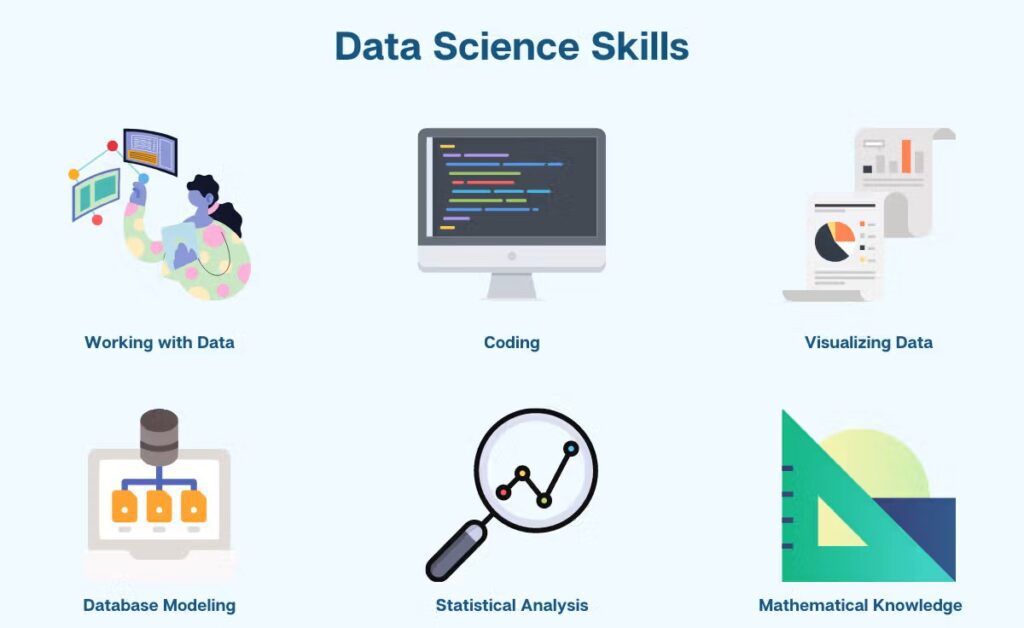
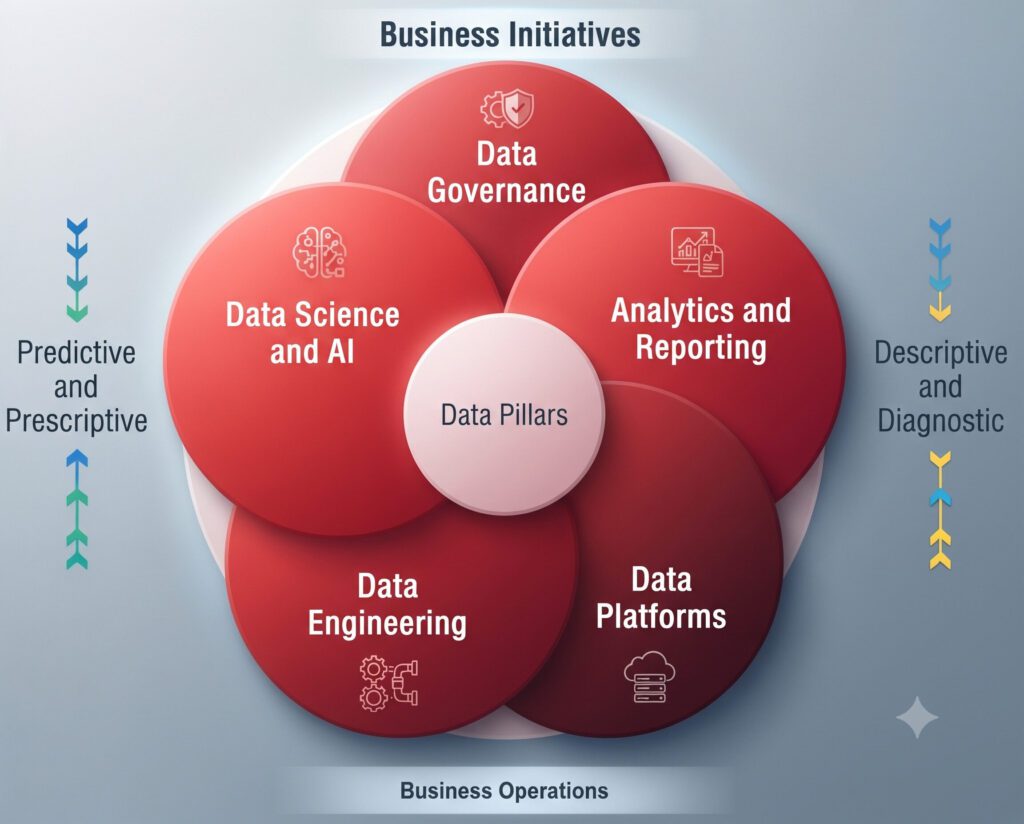
Data science uses statistics, programming, and domain knowledge to find patterns in structured and unstructured data, such as numbers, text, images, and sensor streams. It combines three areas:
- Mathematics and statistics: distributions, hypothesis testing, and model evaluation.
- Programming: Python, SQL, and specialised libraries for data and AI.
- Domain knowledge: understanding the business or industrial problem behind the data.
Data Science Libraries and Tools You Will Master
| Area | Libraries and tools |
|---|---|
| Data handling | NumPy, Pandas, SQL |
| Statistics | SciPy, Statsmodels |
| Machine learning | Scikit-learn, XGBoost |
| Deep learning | TensorFlow / Keras, PyTorch |
| Generative AI and LLMs | LLM APIs, prompt engineering, embeddings, vector databases |
| Agentic AI | LangChain / LangGraph, tool calling, RAG |
| Computer vision | OpenCV, image processing, object detection |
| IoT data | Pandas, MQTT/serial data handling |
| Visualization | Matplotlib, Seaborn, Plotly, Dash |
| Deployment | Flask, Streamlit, Dash apps, intro to AWS |
Data Science Course Syllabus
Module 1: Python Programming. Syntax, data structures, functions, OOP, file handling, and virtual environments.
Module 2: Python Libraries for Data Science. NumPy arrays, Pandas DataFrames, data cleaning, merging, grouping, and handling missing values and outliers.
Module 3: SQL and Databases. Queries, joins, and working with real business datasets.
Module 4: Statistics and Probability. Descriptive statistics, probability distributions, hypothesis testing, and ANOVA.
Module 5: Data Visualization with Matplotlib, Seaborn and Plotly. Static charts for analysis, then interactive Plotly charts: line, bar, scatter, heatmaps, 3D plots, and time-series visuals.
Module 6: Interactive Dashboards with Dash. Build web dashboards using Plotly and Dash: layouts, dropdowns, sliders, callbacks, and live-updating charts, then deploy them for real users.
Module 7: Machine Learning. Regression, classification, decision trees, random forests, SVM, k-means clustering, feature engineering, and model tuning with Scikit-learn.
Module 8: Artificial Intelligence and Deep Learning. Neural networks, model training and evaluation, NLP basics, and generative AI: working with large language models, prompt engineering, and embeddings.
Module 9: Computer Vision. Image processing with OpenCV, face and object detection, image classification with CNNs, and a real-time video analysis project.
Module 10: IoT Data Analytics. Collect sensor data from devices such as Raspberry Pi and NodeMCU [confirm hardware]. Clean, analyse, and predict from temperature, humidity, and other sensor streams, and show them on a live Dash dashboard.
Module 11: Data Science with Agentic AI. Build AI agents that work with data on their own. You learn:
- What agentic AI is and how agents plan, use tools, and make decisions
- Connecting agents to Python, Pandas, SQL databases, and APIs
- Retrieval-Augmented Generation (RAG) to question your own documents and datasets
- Agents that clean data, run analysis, and produce charts and reports automatically
- Chat-with-your-data assistants and AI-powered Dash dashboards
- Multi-step agent workflows, guardrails, and testing for reliable output
- Module 12: Deployment and Cloud. Deploy models, agents, and dashboards, with an introduction to AWS.
- Module 13: Capstone Project and Interview Prep. A portfolio project, GitHub profile setup, resume building, and mock interviews.
Why Agentic AI Matters for Data Scientists
Traditional data science analyses data and predicts outcomes. Agentic AI goes further: AI agents can plan tasks, call tools, analyse data, and act on the results with little manual effort. Companies are starting to look for people who can combine data science with agentic AI to automate analysis, reporting, and decision support. Learning both together makes you useful in more roles than a standard data science course can.
Live Projects You Will Build
- Customer churn prediction: a classification model to flag customers likely to leave.
- Retail sales forecasting: time-series analysis to plan inventory.
- Sentiment analysis: NLP on reviews or social media text.
- Object and face detection with computer vision: an OpenCV-based system working on images and live video.
- IoT sensor data dashboard: collect live sensor readings, store them, and display them in an interactive Plotly Dash dashboard with alerts.
- Business analytics dashboard: a multi-page Dash app with filters and KPIs.
- AI data analyst agent: ask questions in plain English and the agent queries a dataset, runs the analysis, and plots the result.
- Chat with your documents (RAG): an assistant that answers from company PDFs or reports.
- Agent-powered Dash dashboard: a dashboard where an AI agent summarises trends and explains anomalies in IoT sensor or sales data.
- Automated report generator: an agent that cleans a dataset, analyses it, and writes a summary report.
These projects go on your GitHub and resume, so you have proof of skill in interviews.
Why Choose The Core Systems?
- A working technology company: training is shaped by real software, AI, IoT, and industrial automation work.
- Beyond standard data science: most courses stop at machine learning. We add AI, agentic AI, computer vision, IoT data, and dashboard development in one program.
- Practical-first learning: more coding and projects than slides.
- One ecosystem: Python with AI, IoT/IIoT, embedded systems, Linux, AWS, and cybersecurity under one roof.
- Mentor support: [confirm batch size].
- Career support: resume and GitHub review, mock interviews, and [hiring partner connections, only if accurate].
What You Learn in Our Data Science Course
A good data science course takes you from Python basics to deploying real projects. Here are the core areas of our Data Science Course in Jalandhar:
- Python Programming with AI: core Python, data structures, OOP, and the libraries used in data science and AI.
- Data Cleaning and EDA: clean and analyse messy data with Pandas and NumPy, then visualize trends with Matplotlib, Seaborn, and Plotly.
- Statistics and Probability: descriptive statistics, probability distributions, hypothesis testing, and ANOVA.
- Machine Learning: regression, classification, decision trees, random forests, SVM, and k-means clustering with Scikit-learn.
- Deep Learning, Computer Vision and Agentic AI: neural networks, OpenCV projects, and AI agents that analyse data.
- Dashboards and Deployment: build interactive Plotly Dash dashboards and deploy models and apps on AWS.
Data Science Course vs. Other Options
| Feature | College degree alone | Generic institute | The Core Systems |
|---|---|---|---|
| Focus | Theory-heavy | Basic tutorials | Industry-aligned tools |
| AI and agentic AI | Rarely covered | Limited | Included |
| Computer vision and IoT | Rarely covered | Rarely covered | Included |
| Dashboards (Plotly/Dash) | Not covered | Basic charts only | Interactive, deployable dashboards |
| Projects | Lab assignments | Limited | Live, portfolio-ready |
| Mentors | Academic faculty | Varies | Practising developers/engineers |
Who Should Join?
- Students and graduates (BCA, MCA, B.Tech, B.Sc) who want a strong portfolio before job hunting.
- Working professionals who want to move into data, AI, or analytics roles.
- Engineers in automation and electronics who want to work with IoT and sensor data.
- Business owners who want dashboards and data-driven decisions.
Target Audience: Who Should Enroll?
Our programs are meticulously tailored to accommodate diverse career stages:
- University Students & Fresh Graduates: Engineering, BCA, MCA, and science graduates looking to build a high-impact portfolio before entering the job market.
- Working Professionals: Software engineers, financial analysts, and system administrators looking to pivot into high-growth AI and data roles.
- Entrepreneurs & Business Owners: Leaders who want to leverage data analytics to make smarter operational decisions and scale their enterprises.
If you fit into any of these categories, finding the Best Data Science Course in Jalandhar is your first step toward long-term career security.
Soft Skills You Build in Our Data Science Course
Python, SQL, and machine learning are essential, but employers also look for strong soft skills. Our Data Science Course in Jalandhar helps you build them through project work:
- Business Thinking: ask the right questions about a dataset and link your analysis to a real goal.
- Data Storytelling: explain results with clear charts and Plotly Dash dashboards that non-technical people can follow.
- Problem Solving: test, debug, and improve models until they work.
Live Projects in Our Data Science Course
You can’t learn data science just by watching videos. In our Data Science Course in Jalandhar, you write code, fix errors, and deploy real projects, including:
- Customer Churn Prediction: a machine learning model that flags customers likely to leave.
- Retail Sales Forecasting: time-series analysis to plan inventory.
- Sentiment Analysis: NLP on reviews and social media text.
- Computer Vision: face and object detection with OpenCV.
- IoT Sensor Dashboard: live sensor data shown in a Plotly Dash dashboard.
- AI Data Analyst Agent: ask questions in plain English, and the agent analyses the data and plots the results.
Every project goes on your GitHub and resume, so you can show real work in interviews.
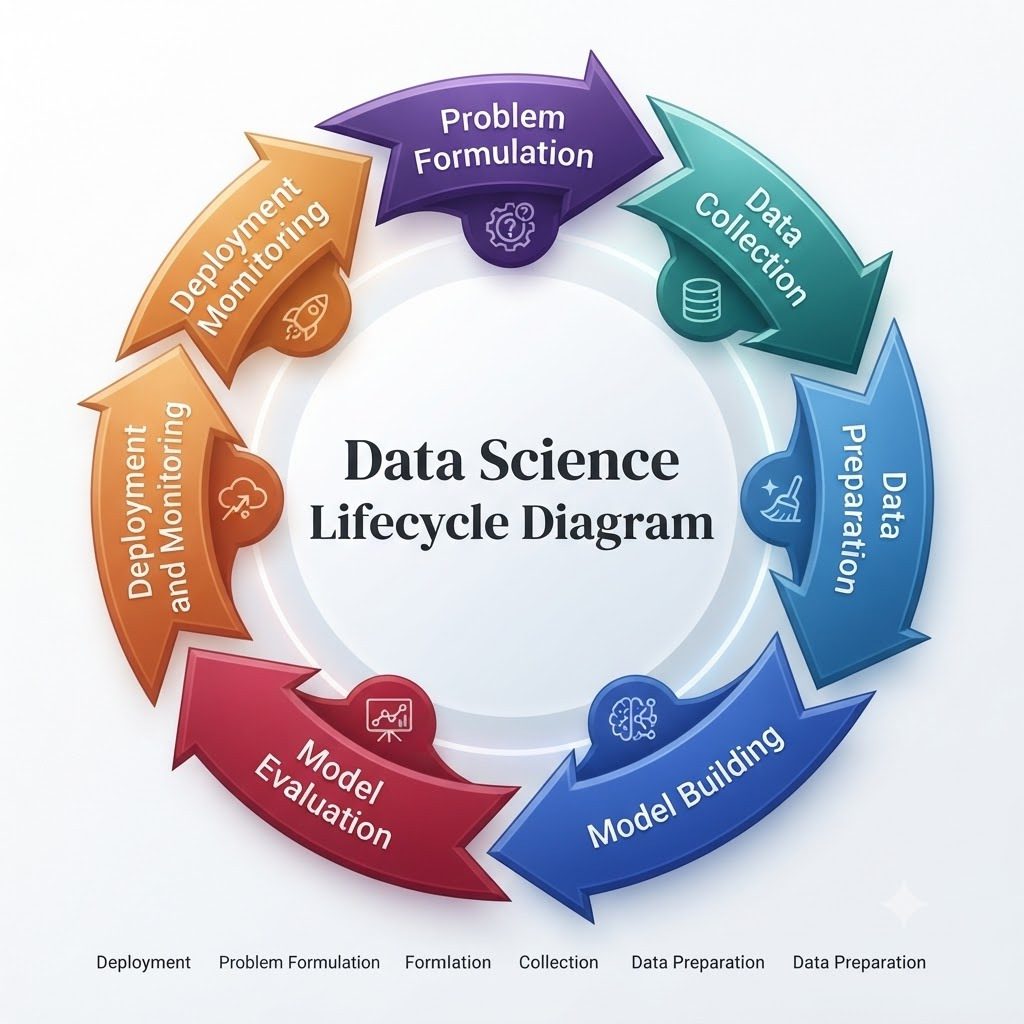
Career Opportunities After the Course
Data Analyst, Junior Data Scientist, Machine Learning Engineer (entry-level), Computer Vision Engineer (entry-level), BI and Dashboard Developer, IoT Data Analyst, Python Developer, and emerging roles such as Generative AI Developer, Agentic AI Developer, and AI Automation Specialist. Salaries and openings vary by skill and company, so don’t promise specific figures.
Career Support and Mentorship
Finishing a Data Science Course in Jalandhar is only the first step. At The Core Systems, we help you turn your skills into a job:
- Resume and GitHub Review: Build a clear resume and a project-based GitHub profile that works with applicant tracking systems (ATS).
- Mock Interviews: practise technical and HR interviews with working developers.
- Job Guidance
Data Science Opportunities in Jalandhar
Businesses in Jalandhar, from manufacturing and sports goods to retail, healthcare, and education, are using data to track sales, plan inventory, and improve production. Our Data Science Course in Jalandhar teaches the skills these businesses need: Python, machine learning, AI, IoT sensor data, and dashboards. You can start building a career in data without leaving the city or you can look forward to regions like Chandigarh Tricity for Data Science and Data Analyst roles.
What makes this the Best Data Science Course?
Do I need a strong coding background to join a Data Science Course?
Can working professionals enroll in this program?
What programming languages and tools are taught during the program?
How does The Core Systems differ from online-only video courses?
Launch Your Career with the Best Data Science Course in Jalandhar
With AI transforming industries, the demand for certified data science professionals has never been higher. Gain hands-on experience, master real-world AI applications, and secure high-growth career opportunities.
Join The Core Systems today to future-proof your career with industry-leading Data Science and AI training in Jalandhar.